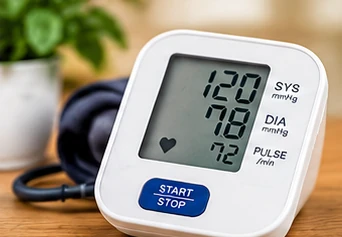
Sodium & Blood Pressure
Sodium and blood pressure are closely connected. Major health authorities consistently identify higher sodium intake as a factor that can raise blood pressure, and they support reducing excessive sodium intake as a way to lower it.
This page focuses specifically on what authorities and research say about sodium and blood pressure. It is not a general guide to diagnosing or treating high blood pressure.
How Sodium Can Raise Blood Pressure
The FDA explains that sodium attracts water. Consuming a high-sodium diet can draw more water into the bloodstream, increasing blood volume. Greater blood volume means the heart must work harder to move blood through the body, which can increase blood pressure.
The NIDDK provides a complementary explanation: excess sodium can cause the body to retain additional fluid, which can raise blood pressure and place extra strain on the kidneys.
Reducing excessive sodium intake can lower blood pressure.
Sodium is not the only factor that affects blood pressure, and individual responses can vary. The relationship is consistent across major health authorities, but it does not mean that every person experiences the same degree of change.
What Research Has Found
The National Institutes of Health (NIH) has published findings from a controlled study on sodium and blood pressure that illustrate the relationship clearly.
Study — NIH Research Matters: “Lower sodium could reduce blood pressure in most people”
The study involved 213 adults ages 50–75. Participants followed a high-sodium diet and a low-sodium diet and had their blood pressure measured after each diet period.
What NIH reported:
"Nearly 75% of participants had lower systolic blood pressure"
on the low-sodium diet than on the high-sodium diet.
NIH reported an average difference of 7 mm Hg between the high- and low-sodium diets.
between the high- and low-sodium diets. A 7 mm Hg reduction means the upper (systolic) blood-pressure number was 7 points lower on average in this study.
Compared with participants’ usual diets, 72% had lower systolic blood pressure on the low-sodium diet, with an average reduction of 6 mm Hg — approximately 6 points lower in the upper blood-pressure number.
"The effect of dietary sodium didn’t depend on whether a person had high blood pressure to begin with."
NIH also reported that the effect was not dependent on whether participants were taking blood-pressure medication. This is a study finding; it is not guidance about medication.
Research findings establish what was observed in a study population. They contribute to the broader scientific understanding of sodium and blood pressure, but they are different from universal recommendations.
Why the Effect Is Not Exactly the Same for Everyone
“The sensitivity of blood pressure to sodium … varies from person to person.”
— NIH
EFSA also recognizes that the blood-pressure response to sodium can be influenced by other characteristics and circumstances.
The overall direction of the relationship — higher sodium associated with higher blood pressure, and sodium reduction associated with lower blood pressure — is consistent across major authorities and research. The magnitude of the change for any specific individual is a different question.
Sodium Recommendations
Major health authorities publish sodium reference values that reflect their own methodologies and purposes. These values are not interchangeable, and none of them is automatically an individual medical prescription.
| Authority | Sodium reference |
|---|---|
| U.S. Food and Drug Administration (FDA) | 2,300 mg/day — Daily Value for adults |
| Centers for Disease Control and Prevention (CDC) | Less than 2,300 mg/day for teens and adults |
| American Heart Association (AHA) | No more than 2,300 mg/day; optimal goal of no more than 1,500 mg/day for most adults |
| World Health Organization (WHO) | Less than 2,000 mg/day for adults |
| European Food Safety Authority (EFSA) | 2,000 mg/day — safe and adequate intake for the general EU adult population |
My Sodium Today uses the FDA Daily Value of 2,300 mg of sodium for adults as its primary tracking reference — the same value used on U.S. Nutrition Facts labels. See References for the specific sources behind each authority’s position.
What My Sodium Today Tracks
My Sodium Today tracks the sodium a user records in their meals. It displays that sodium in two equivalent forms:
- Milligrams (mg) — the absolute amount of sodium consumed
- % of the FDA Daily Value for adults — the same amount expressed relative to 2,300 mg
These are two representations of the same quantity. My Sodium Today does not:
- Measure blood pressure
- Diagnose high blood pressure
- Determine whether a person's blood pressure is caused by sodium
- Predict an individual's blood-pressure response to sodium
- Provide treatment recommendations
The Blood Pressure section on the homepage allows you to record blood-pressure readings as a personal log. Those readings are stored locally on your device and are not interpreted or analyzed by the application.
Bottom Line
Research has demonstrated this effect in people with and without high blood pressure. Individual responses vary, but the overall direction of the relationship is consistent across major authorities and study findings.
There is an important distinction between tracking sodium intake and determining what that sodium intake means for an individual’s health. My Sodium Today does the first. It does not attempt to do the second.
Sources
- U.S. Food and Drug Administration (FDA) — Sodium in Your Diet
- Centers for Disease Control and Prevention (CDC) — About Sodium and Health
- National Institute of Diabetes and Digestive and Kidney Diseases (NIDDK) — sodium, fluid balance, and blood pressure resources
- American Heart Association (AHA) — sodium and blood pressure guidance
- World Health Organization (WHO) — Sodium reduction
- European Food Safety Authority (EFSA) — scientific assessment of sodium and adverse health effects
- National Institutes of Health (NIH) — Lower sodium could reduce blood pressure in most people (NIH Research Matters)
See References for the specific documents and links.